And How to Build a Crisis-Resilient Budget That Actually Works
For decades, budgeting advice sounded reassuringly simple:
Earn an income.
Track expenses.
Save what you can.
Stick to the plan.
Then the world changed.
Income paused without warning.
Prices shifted overnight.
Movement, health, and access became uncertain.
And many people quietly discovered a painful truth:
👉 Most budgets were designed for stability — not for disruption.
The Real Reason Budgets Fail (That No One Talks About)
When people say “budgeting doesn’t work”, they often blame themselves.
But the problem is rarely discipline.
Traditional budgets assume:
- income will arrive as expected
- expenses will remain predictable
- emotional energy will stay available
In crisis, all three collapse at once.
Fear rises.
Decisions feel heavy.
People abandon the budget — not because they don’t care, but because the system no longer fits reality.
A rigid plan in a flexible world will always break.
Before You Budget, Ask This One Question
Here’s the question most financial tools skip:
How safe is my income if life changes suddenly?
Many people budget first and assess risk later — if at all.
That’s backwards.
👉 Start with clarity
Take the Income Fragility Test™
This short diagnostic helps you understand:
- How exposed your income is to disruption
- Whether you need stronger buffers
- What kind of planning fits your reality
It’s calm and takes just a few minutes.
[ Take the Income Fragility Test → ]
🌱 Step 2: Build a System That Adapts to Changes
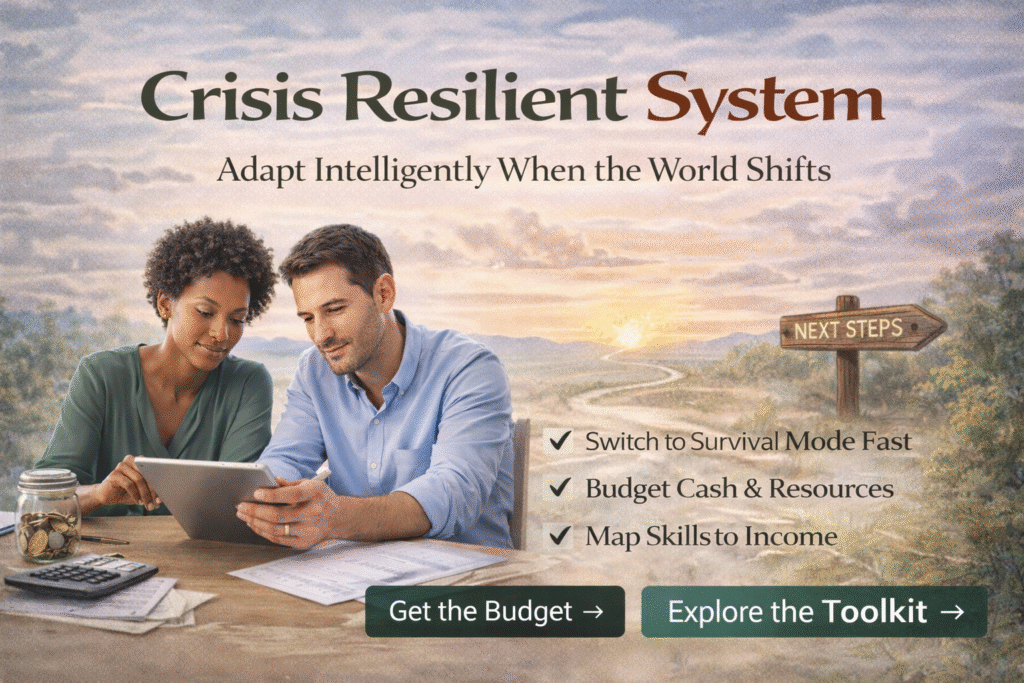
👉 Get the Crisis Resilient Budget
Once you know your risk level, move into a budgeting system designed for uncertainty.
Inside the Crisis Resilient Budget, you’ll find:
- Normal Mode & Survival Mode planning
- Freeze Lists for instant decision relief
- Skill-to-Income mapping
- Family & calm-centered resilience tools
- Post-crisis recovery planning
This is not about controlling life —
it’s about staying grounded while life changes.